
RIVIERA PRO HYGIENE · For healthcare professionals
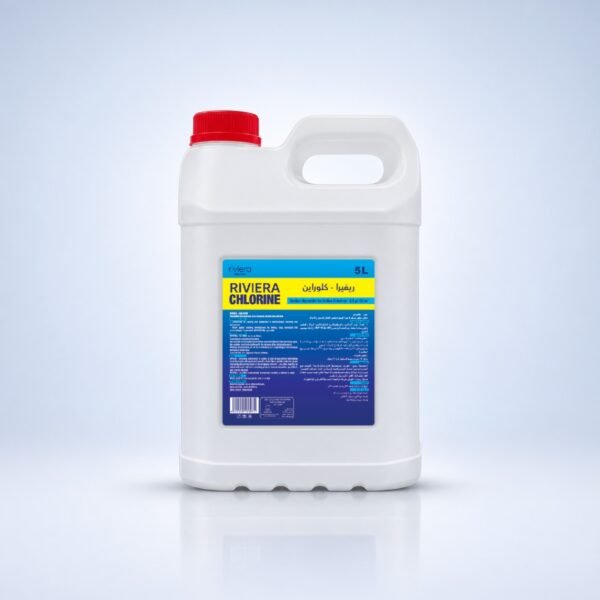
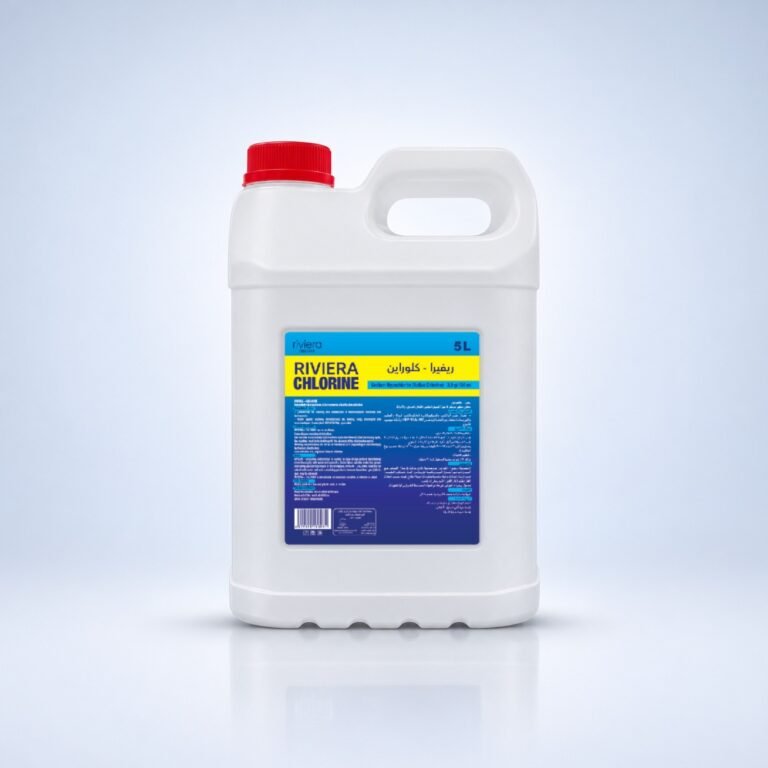
RIVIERA CHLORINE
Haemodialysis Machine & Instrument Disinfectant
- Concentrate 3%
- Haemodialysis machines
- Chlorine-resistant instruments
- Well-ventilated area
WhereHaemodialysis machines
HowDilute, then use
Time15–30 minutes
4StepPer the machine manufacturer's instructions
Size: 5 L · Canister
SKU RV-PH-CHLORINE-5L
This size has no listed price yet: send an order request and management will contact you with the price and delivery time.
About this product
RIVIERA CHLORINE is a sodium hypochlorite solution (3.9 g active chlorine per 100 mL) for disinfecting haemodialysis machines and chlorine-resistant instruments.
For dialysis machines use 3% for 15–30 minutes at 60 °C depending on the machine and its manufacturer’s instructions, then test the machine after rinsing to confirm no disinfectant remains. For instruments: 3% for 60 minutes.
Caustic solution: never mix with acids because chlorine gas is released, and do not use on chlorine-sensitive materials. Wear gloves and eye protection.
- Form
- Concentrate 3%
- Contact time
- 15–30 minutesDialysis machines: 3% · 15–30 min · 60 °C · Instruments: 3% · 60 min
- Step in the cycle
- Per the machine manufacturer's instructions
- Packs
- 5 L
Default sterilization order
Where it fits in the patient cycle
- 0Wash hands if visibly soiledRIVIERA WASH
- 1Hand antisepsis before the patient and after glove removalSEPTA RAPID
- 2Clinical-contact surfaces between patientsBROADFECT · SEPTA-S
- 3Enzymatic instrument cleaningINSTRUVIRA PLUS
- 4High-level disinfection of endoscopes & instrumentsFAST CLEANYou are here
- 5Rinse · dry · inspect
- 6Pack, then autoclaveFinal sterilization
Where to use it
- Haemodialysis machines
- Chlorine-resistant instruments
- Well-ventilated area
- Rinse cycle after disinfection
- Test machine for residual disinfectant
Do not use for:
Mixing with acids (releases chlorine gas)Chlorine- or alkali-sensitive materialsHands or skin
Benefits
- Dialysis machines3% for 15–30 min at 60 °C.
- Broadest spectrumIncludes spores at the right strength and time.
- For chlorine-resistant instruments3% for 60 minutes.
- Economical concentrateNo alcohol, phenol or formaldehyde.
Antimicrobial spectrum and contact time
Organisms are ordered from easiest to hardest to kill. The more resistant the organism, the longer the contact time or the stronger the agent it needs; bacterial spores are the most resistant.
- Enveloped virusesInfluenza, coronaviruses, HBV, HCV, HIVActive Reference10 min · 200 ppm on 25 viruses (CDC 2008)
- BacteriaIncluding MRSA and VREActive ReferenceSeconds · under 5 ppm (CDC 2008)
- Yeasts & fungiCandidaActive ReferenceUnder 1 h at the right strength (CDC 2008)
- Non-enveloped virusesRota, adeno, noroActive Reference10 min · 200 ppm (CDC 2008)
- MycobacteriaTB bacilliActive Reference1000 ppm for M. tuberculosis (CDC 2008)
- Bacterial sporesThe most resistantActive Reference5 min · 100 ppm on B. atrophaeus (CDC 2008)
Contact time by use: 15–30 minutes for dialysis machines and 60 minutes for instruments. Organic matter inactivates chlorine, so clean first.
The time next to the clock is the product’s contact time and appears only where the literature for the active class supports it. Under each group: the time or condition the reference reports. Activity not established needs a product test report to European (EN) standards.
- Rutala WA, Weber DJ, HICPAC. Guideline for Disinfection and Sterilization in Healthcare Facilities, 2008 (updated 2019). CDC.
- Rutala WA, Weber DJ. Uses of inorganic hypochlorite (bleach) in health-care facilities. Clin Microbiol Rev. 1997;10(4):597–610. PMID 9336664
What’s inside, simply explained
Select an ingredient to see what it is and why it is used. The simple explanation is for nurses and assistants, the scientific one for doctors and specialists.
Sodium hypochlorite 3.9 g/100 mL Cl
In simple words
Active chlorine, one of the broadest-spectrum disinfectants.
Its role here
Active
The science, for doctors and specialists
Forms hypochlorous acid, which oxidises enzymes, membranes and DNA; inactivated by organic matter and releases chlorine gas with acids.
How to use
- 1Wear gloves and safety glasses or a face mask.
- 2Prepare a 3% dilution.
- 3Machines 15–30 min at 60 °C; instruments 60 min.
- 4Rinse and verify absence of disinfectant.
Required contact time
15–30 minutes
Dialysis machines: 3% · 15–30 min · 60 °C · Instruments: 3% · 60 min
Dilution calculator
Bath / container volume
RIVIERA CHLORINE—mL
Water—mL
- Irritant oxidiser (sodium hypochlorite)
Never mix with acids, ammonia products or other cleaners: toxic gas may be released. Use with good ventilation, gloves and eye protection.
Safe-use informationLimits of use before you start
Caustic solution: in case of eye contact rinse immediately with water and consult a doctor.
Keep out of reach of children, in the original closed container. Read the label and the safety data sheet before use.
Technical documents
From the Riviera science journal
Read about disinfection
Instruments & endoscopes
More for the same area
INSTRUVIRA PLUS
Concentrated Enzymatic Cleaner for Endoscopes & Medical Instruments
Price on requestAdd to order

FAST CLEAN
High-Level Disinfectant for Endoscopes & Instruments, and for High-Risk Surfaces
Price on requestAdd to order