Hair & scalp5 min read · 10 references
Dandruff: why it happens and how to care for your scalp
Dandruff is common and usually harmless. Here is what drives it, which ingredients dermatologists look for, and how to build a simple scalp routine.
Few things are as common, or as quietly frustrating, as white flakes on a dark shirt. Dandruff affects a large share of adults at some point in life, in every climate and every hair type. It is not a sign of poor hygiene and it is not contagious. Understanding what is happening on the scalp makes it much easier to choose a sensible routine.
What dandruff actually is
The skin of the scalp renews itself all the time. Normally, old skin cells are shed in tiny pieces that we never notice. With dandruff, this renewal speeds up and the cells clump together, so they come off as visible white or yellowish flakes. Itching is common; redness is usually mild or absent.
Researchers describe dandruff as the mild, non-inflammatory end of the same spectrum as seborrhoeic dermatitis, which is more inflamed and can also affect the face, eyebrows and chest [1, 2].
Why it happens
Three factors appear to work together [1, 2]:
- Sebum. Dandruff tends to appear where the skin produces more oil, which is why it often starts after puberty and is more frequent in adults than in children.
- Malassezia yeasts. These yeasts live on almost everyone's skin. They break down sebum into fatty acids, and in some people the scalp reacts to these by-products with faster shedding and irritation.
- Individual sensitivity. The same amount of yeast causes flakes in one person and nothing in another. The skin barrier and the immune response seem to make the difference.
Cold, dry weather, stress, infrequent washing and some styling products can make flakes more visible. Dandruff often improves in summer and returns in winter.
Common myths
"Dandruff means a dry scalp." Not usually. A dry scalp gives small, fine, white flakes and often feels tight; dandruff flakes tend to be larger and slightly oily. Oiling the scalp heavily can make true dandruff worse by feeding the yeasts.
"Washing less helps." The opposite is often true. Regular washing removes sebum and loose scale. Many people with dandruff do better washing more often, not less [3].
"Once it's gone, it's gone." Dandruff tends to come back. Most people need a maintenance routine rather than a one-off fix.
What dermatologists look for in a shampoo
The American Academy of Dermatology suggests choosing a dandruff shampoo by its active ingredient and following the label directions closely [3]. Commonly used ingredients include:
- Zinc pyrithione and selenium sulfide, which reduce the yeasts on the scalp;
- Ketoconazole, an antifungal ingredient;
- Salicylic acid, which helps loosen and lift scale;
- Coal tar, which slows how quickly skin cells are produced.
Some of these ingredients are regulated as medicines in many countries, including Syria, so strength and use depend on how the product is registered. Read the leaflet, and ask your pharmacist which option suits your hair type.
Practical tips from dermatologists [3]:
1. Leave the lather on. Many anti-dandruff shampoos need a few minutes of contact time before rinsing. Follow the time printed on the pack.
2. Massage the scalp, not just the hair. Work the shampoo gently into the skin with the fingertips, never the nails.
3. Alternate if needed. If one ingredient stops helping, a product with a different active may.
4. Mind the rest of your routine. Heavy oils, waxes and dry shampoos can build up on the scalp.
Building a simple scalp routine
- Wash often enough to keep oil under control, typically every one to three days depending on your hair.
- Use a specific scalp-care shampoo as directed, and a regular mild shampoo on the other days if you prefer.
- Rinse thoroughly; product residue can itch.
- Dry the scalp, not only the lengths, especially in winter.
- Keep combs and brushes clean.
When to see a doctor or pharmacist
Speak to a doctor, dermatologist or pharmacist if:
- the scalp is very red, swollen, painful or weeping;
- flakes spread to the face, ears, eyebrows or chest;
- you notice thick, silvery patches or hair loss in one area;
- several weeks of a well-chosen shampoo bring no change.
These can be signs of a different skin condition that needs proper diagnosis.
Where Riviera fits
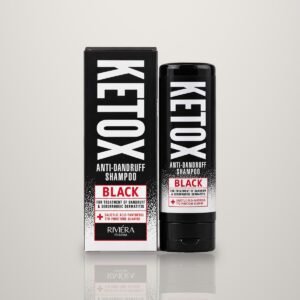
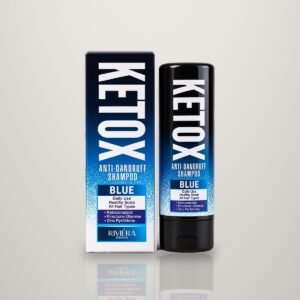
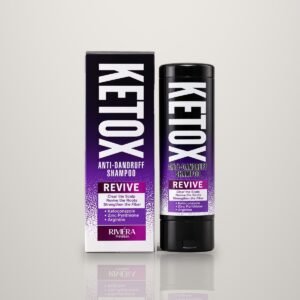
Riviera's hair and scalp range includes shampoos made for regular scalp care. Each product page lists the full ingredients and directions. Explore the Hair & Scalp range or read more in Find care by concern: Dandruff.
Riviera Pharma
How Riviera can help
Meet the ingredients
ProfessionalA scientific summary for pharmacists and physicians; references are published and verified on PubMed.
Definition and spectrum
Dandruff is a chronic, non-inflammatory to mildly inflammatory scaling disorder confined to the scalp, characterised by diffuse, fine-to-moderate flaking and variable pruritus. It is now viewed as the mild end of a single disease continuum with seborrheic dermatitis (SD), which adds visible erythema, greasy scale and involvement of other seborrheic sites (Borda 2015; Schwartz 2013). Both share Malassezia colonisation, sebaceous activity and host susceptibility as necessary co-factors (DeAngelis 2005).
Epidemiology
Dandruff is estimated to affect roughly half of the adult population worldwide, peaking after puberty and declining after middle age, in parallel with sebaceous output (Borda 2015). It is somewhat more frequent in men. Seasonal worsening in winter and with low humidity is commonly reported, and psychological stress is a recognised aggravating factor (Borda 2015; Ranganathan 2010).
Pathophysiology
Malassezia globosa and M. restricta are the predominant species on the human scalp (Dawson 2007). Lacking fatty-acid synthase, they depend on exogenous lipids: secreted lipases hydrolyse sebaceous triglycerides, the yeast consumes specific saturated fatty acids, and unsaturated free fatty acids such as oleic acid are left on the skin surface (DeAngelis 2005; Dawson 2007). Topical oleic acid alone reproduces dandruff-like flaking in susceptible, but not in non-susceptible, individuals, which illustrates the role of host sensitivity (DeAngelis 2005).
The scalp of dandruff sufferers shows stratum corneum dysfunction: parakeratosis, disordered corneocyte maturation, reduced and altered intercellular lipids, increased transepidermal water loss and higher levels of inflammatory mediators such as IL-1 family cytokines and histamine (Turner 2012; Schwartz 2013). This barrier impairment both facilitates penetration of irritant metabolites and sustains a low-grade inflammatory loop; the severity of flaking correlates with this damage even when visible erythema is absent (Schwartz 2013).
Diagnosis and differential
Diagnosis is clinical. Typical findings are diffuse, small, white-to-yellowish scales without well-demarcated plaques or significant erythema. Key differentials (Grimalt 2007; Borda 2015):
- Seborrheic dermatitis: erythema, greasier scale, extension to hairline, eyebrows, nasolabial folds, ears or chest.
- Scalp psoriasis: sharply demarcated, thick silvery plaques, often beyond the hairline; look for nail pitting and plaques elsewhere.
- Tinea capitis: patchy scaling with broken hairs, alopecia or lymphadenopathy, especially in children; confirm with KOH microscopy or culture.
- Atopic or allergic/irritant contact dermatitis: history of atopy or new hair products, eczematous changes.
- Simple dry scalp (xerosis): fine scale, no greasiness, improves with less frequent washing.
Persistent or atypical cases warrant referral.
Management
The aim is control, not cure. Antifungal shampoos form the basis of therapy, because reducing Malassezia load lowers free fatty acid release and the downstream inflammatory and barrier responses (Ranganathan 2010; Saunte 2020):
- Azoles: ketoconazole (best documented) and climbazole inhibit ergosterol synthesis.
- Hydroxypyridones: ciclopirox and piroctone olamine act by iron chelation and membrane disruption.
- Zinc pyrithione: broad antifungal activity and long cosmetic use.
- Selenium sulfide: antifungal and cytostatic; may discolour hair or leave an odour.
- Keratolytics: salicylic acid loosens adherent scale and may improve penetration of co-applied actives.
In a multicentre randomised trial in severe dandruff and SD, ketoconazole shampoo produced greater improvement than zinc pyrithione shampoo (Pierard-Franchimont 2002).
Practical counselling matters as much as agent choice. Apply to the scalp, not only the hair, and respect label contact time of several minutes before rinsing. Use an attack phase of two to three applications weekly for about four weeks, then a maintenance phase of once weekly or every other week, because relapse after cessation is the rule (Borda 2015). Alternating agents with different mechanisms is a reasonable strategy for long-term use. Lack of response after about four weeks of correct use should prompt reassessment of the diagnosis.
Regulatory note
Zinc pyrithione was classified as a CMR substance (category 1B, reproductive toxicity) and has been listed in Annex II of the EU Cosmetics Regulation, prohibiting its use in cosmetic products placed on the EU market, since 1 March 2022 (Commission Regulation (EU) 2021/1902). Regulatory status differs between jurisdictions, and pharmacists should follow the rules applicable in their own market.
References
- 1Borda LJ, Wikramanayake TC. Seborrheic dermatitis and dandruff: a comprehensive review. J Clin Investig Dermatol. 2015;3(2). PMC4852869. PMID 27148560 DOI
- 2Ranganathan S, Mukhopadhyay T. Dandruff: the most commercially exploited skin disease. Indian J Dermatol. 2010;55(2):130–134. PMID 20606879 DOI
- 3American Academy of Dermatology Association. How to treat dandruff. aad.org (Everyday care › Hair & scalp care).
- 4Schwartz JR, Messenger AG, Tosti A, Todd G, Hordinsky M, Hay RJ, et al. A comprehensive pathophysiology of dandruff and seborrheic dermatitis - towards a more precise definition of scalp health. Acta Derm Venereol. 2013;93(2):131-7. PMID 22875203 DOI
- 5DeAngelis YM, Gemmer CM, Kaczvinsky JR, Kenneally DC, Schwartz JR, Dawson TL Jr. Three etiologic facets of dandruff and seborrheic dermatitis: Malassezia fungi, sebaceous lipids, and individual sensitivity. J Investig Dermatol Symp Proc. 2005;10(3):295-7. PMID 16382685 DOI
- 6Dawson TL Jr. Malassezia globosa and restricta: breakthrough understanding of the etiology and treatment of dandruff and seborrheic dermatitis through whole-genome analysis. J Investig Dermatol Symp Proc. 2007;12(2):15-9. PMID 18004291 DOI
- 7Turner GA, Hoptroff M, Harding CR. Stratum corneum dysfunction in dandruff. Int J Cosmet Sci. 2012;34(4):298-306. PMID 22515370 DOI
- 8Grimalt R. A practical guide to scalp disorders. J Investig Dermatol Symp Proc. 2007;12(2):10-4. PMID 18004290 DOI
- 9Saunte DML, Gaitanis G, Hay RJ. Malassezia-associated skin diseases, the use of diagnostics and treatment. Front Cell Infect Microbiol. 2020;10:112. PMID 32266163 DOI
- 10Pierard-Franchimont C, Goffin V, Decroix J, Pierard GE. A multicenter randomized trial of ketoconazole 2% and zinc pyrithione 1% shampoos in severe dandruff and seborrheic dermatitis. Skin Pharmacol Appl Skin Physiol. 2002;15(6):434-41. PMID 12476017 DOI
Found it useful? Share it with someone who cares
Reviewed by: Riviera Pharma Scientific Affairs Team. General information, not medical advice. This article does not replace a consultation with a doctor or pharmacist.