Infection control5 min read · 4 references
Cleaning, disinfection and sterilization: what is the difference?
Three steps that are often confused but never interchangeable. Cleaning removes soil, disinfection reduces microorganisms, sterilization destroys all microbial life, and every later step depends on cleaning done well.
In infection control three words are used almost interchangeably: cleaning, disinfection and sterilization. They are not the same. Each one does a different job, and skipping or merging them is one of the most common reasons infection-control routines fail.
Cleaning: removing what you can see
Cleaning is the physical removal of soil such as blood, saliva, protein, fat and dust, using water with a detergent or an enzymatic cleaner and mechanical action such as rubbing, brushing or ultrasound. Cleaning lowers the number of microorganisms because it carries them away with the dirt, but it is not designed to kill them.
Cleaning always comes first. Organic material forms a protective layer over microorganisms and neutralises many active ingredients, so a disinfectant or a sterilizer cannot work properly on a surface or instrument that has not been cleaned.
Disinfection: reducing microorganisms
Disinfection uses a chemical product, or sometimes heat, to eliminate most microorganisms on a cleaned surface or object, within a defined contact time. It does not necessarily destroy every form of microbial life, especially bacterial spores. Its levels (low, intermediate and high) are matched to how the item is used.
On the skin the same idea is called antisepsis: an antiseptic reduces microorganisms on living tissue, such as an alcohol-based hand rub before treating a patient.
Sterilization: destroying all microbial life
Sterilization destroys or removes all forms of microbial life, including spores. In the dental clinic the standard method for heat-tolerant instruments is steam under pressure in the autoclave. Instruments that enter sterile tissue or bone must be sterilized, and they must be cleaned, dried and packed before they go in.
Which level does each item need?
The Spaulding classification links the level of processing to the risk of the item:
- Critical items that penetrate tissue or bone, such as surgical instruments and scalers: cleaning, then sterilization.
- Semicritical items that touch mucous membranes, such as mouth mirrors and impression trays: cleaning, then sterilization if they tolerate heat, or high-level disinfection if they do not. Flexible endoscopes belong here.
- Noncritical items that touch only intact skin, and environmental surfaces: cleaning, then low- or intermediate-level disinfection.
Hands follow the same logic
Hand hygiene has the same order. Washing with soap and water is the cleaning step: it removes visible dirt, blood and organic matter. Hand antisepsis with an alcohol-based rub is the step that reduces microorganisms on hands that are already clean. When hands are visibly soiled, a rub alone is not enough, because alcohol does not remove dirt.
Where Riviera products fit
- RIVIERA WASH is the cleaning step for hands: an antimicrobial hand wash for hand-wash stations and for whenever hands are visibly soiled.
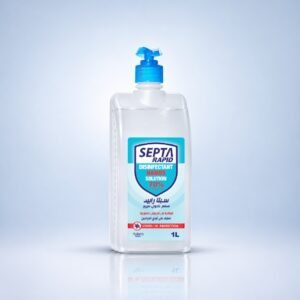
- SEPTA RAPID is the hand antisepsis step on clean, dry hands between patients.
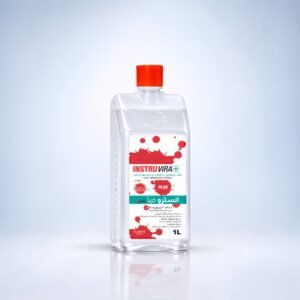
- INSTRUVIRA PLUS is the cleaning step for instruments and endoscopes before disinfection or the autoclave.
None of these products replaces sterilization. Always follow the label for dilution, amount and contact time.
Riviera Pharma
How Riviera can help

Meet the ingredients
ProfessionalA scientific summary for pharmacists and physicians; references are published and verified on PubMed.
Definitions follow CDC/HICPAC (Rutala 2008): cleaning is removal of visible soil and is the necessary first step because residual organic matter shields microorganisms and inactivates germicides; disinfection eliminates many or all pathogens except bacterial spores; sterilization destroys all microbial life. The Spaulding scheme (critical, semicritical, noncritical) assigns the processing level, as applied to dentistry by Kohn 2003. WHO 2009 places soap-and-water washing for visibly soiled hands and alcohol-based rub for routine antisepsis. Mechanisms of cationic surfactants and alcohols are reviewed by McDonnell & Russell 1999.
References
- 1Rutala WA, Weber DJ; HICPAC. Guideline for Disinfection and Sterilization in Healthcare Facilities, 2008 (update 2019). Atlanta: CDC.
- 2Kohn WG, Collins AS, Cleveland JL, et al. Guidelines for infection control in dental health-care settings - 2003. MMWR Recomm Rep. 2003;52(RR-17):1-61. PMID 14685139
- 3World Health Organization. WHO Guidelines on Hand Hygiene in Health Care. Geneva: WHO; 2009.
- 4McDonnell G, Russell AD. Antiseptics and disinfectants: activity, action, and resistance. Clin Microbiol Rev. 1999;12(1):147-179. PMID 9880479
Found it useful? Share it with someone who cares
Reviewed by: Riviera Pharma Scientific Affairs Team. General professional information; it does not replace national infection-control rules, the product label or the safety data sheet.