Oral health4 min read · 9 references
Fresh breath, explained: what really causes bad breath
Most bad breath starts in the mouth, not the stomach. Here is what causes it, which myths to ignore, and the simple daily habits that help.
Did you know?
Most lasting bad breath starts in the mouth, very often on the back of the tongue.
The smell comes mainly from sulphur gases made by bacteria that thrive where there is little oxygen.
A dry mouth makes bad breath worse; drinking water and keeping saliva flowing helps.
Mouthwash is an add-on to brushing, flossing and tongue cleaning, not a replacement.
Why breath turns stale
Almost everyone wakes up with "morning breath" now and then. Overnight, saliva flow slows down and the mouth becomes a quiet, low-oxygen place where certain bacteria thrive. These bacteria break down tiny bits of food, dead cells and proteins, and release gases that contain sulphur. Those gases are what we notice as bad breath.
The good news is that in roughly nine out of ten people with lasting bad breath, the source is in the mouth itself, not the stomach. That means simple daily habits can usually make a real difference.
The usual suspects
- A coated tongue. The back of the tongue has a rough surface that traps bacteria and debris. A white or yellowish coating is one of the most common sources of odour.
- Gum problems. Plaque left along the gumline can inflame the gums, and small pockets around the teeth become a hiding place for odour-making bacteria.
- Dry mouth. Saliva rinses and protects the mouth. Breathing through the mouth, not drinking enough water, some medicines and ageing can all reduce it.
- Food and drink. Garlic, onion, strong spices, coffee and alcohol can leave a smell that lingers for hours.
- Smoking. Tobacco leaves its own odour, dries the mouth and harms the gums.
- Less often, other causes. Sinus or tonsil problems and, occasionally, general health conditions can play a part.
Myths worth dropping
MythBad breath always comes from the stomach.
FactMost bad breath starts in the mouth, usually on the tongue or around the gums. Stomach causes are uncommon.
MythA strong mouthwash on its own will fix it.
FactA mouthwash can freshen the breath and help reduce odour-causing bacteria, but it works best as an add-on to brushing, flossing and tongue cleaning. If the cause is not dealt with, the smell tends to come back.
MythIf I can't smell it, I don't have it.
FactWe quickly get used to our own smell. Asking someone you trust, or your dentist, is far more reliable than breathing into your hand.
Simple habits that make a difference
- Brush twice a day for two minutes with a fluoride toothpaste.
- Clean between your teeth once a day with floss or small interdental brushes.
- Clean your tongue gently, from back to front, with a tongue cleaner or your toothbrush.
- Drink water through the day, especially if your mouth feels dry. Sugar-free chewing gum can help keep saliva flowing.
- Cut down on smoking, or better still, ask for help to stop.
- If you wear dentures or a retainer, clean them every day.
- Use a mouthwash as an extra step after cleaning, not as a replacement for it.
When to see a dentist or doctor
Book a dental check-up if bad breath lasts more than a couple of weeks despite good habits, or if you notice bleeding or swollen gums, loose teeth, toothache or a mouth that always feels dry. Your dentist can find and treat gum disease, decay or worn fillings that trap food.
If your mouth is healthy but the smell continues, a doctor may look for sinus, tonsil or other causes. Get advice promptly if bad breath comes with fever, a sore throat that does not settle, unexplained weight loss, or a sweet or fruity smell on the breath.
A fresh start
Bad breath is common, and it is rarely a sign of anything serious. With a little daily care for your teeth, gums and tongue, and plenty of water, most people notice a fresher mouth within days. Your pharmacist is a good first person to ask.
Riviera Pharma
How Riviera can help
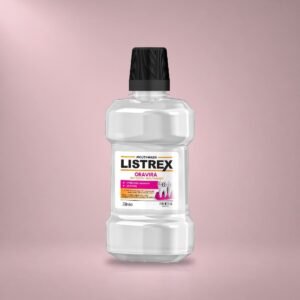
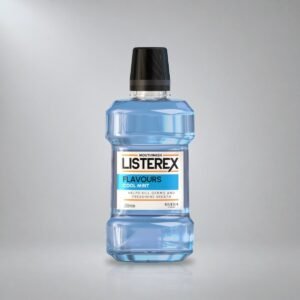
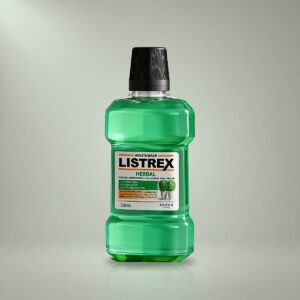
Alongside brushing, flossing and tongue cleaning, a daily mouthwash can help keep breath fresh. Listrex Oravira contains hydrogen peroxide, an oxygenating ingredient, together with xylitol, sorbitol and menthol, and helps freshen the mouth as part of a full routine. LISTREX Flavours is a range of daily mouthwashes in Cool Mint, Hot Mint, Spearmint, Strawberry and Ginger, so you can choose the flavour you are most likely to use every day. LISTREX Herbal has a sugar-free base with xylitol and sorbitol and a herbal character, for those who prefer a herbal option. Mouthwash is an add-on to brushing, not a replacement, and it is not a treatment for gum disease or other causes of bad breath. Ask your pharmacist which option suits you and how to use it. When bad breath comes with a sore throat, LISTREX Throat Spray with propolis, honey and herbal oils helps soothe the throat and freshen the breath as supportive care.

Meet the ingredients
ProfessionalA scientific summary for pharmacists and physicians; references are published and verified on PubMed.
Definition and classification
Halitosis describes an unpleasant odour of exhaled breath, whatever its origin. The commonly used classification separates genuine halitosis (physiological, such as morning breath, or pathological), pseudo-halitosis (malodour perceived by the patient but not confirmed by others) and halitophobia (persistent concern after successful treatment or exclusion of genuine halitosis). Pathological halitosis is further divided into intra-oral and extra-oral forms (Scully & Greenman 2008; Seemann 2014). Extra-oral halitosis may be non-blood-borne, arising from the upper or lower respiratory tract, or blood-borne, reflecting systemic or metabolic disease or medication (Tangerman & Winkel 2010).
Epidemiology
A systematic review with meta-regression of 13 studies estimated a pooled prevalence of 31.8% (95% CI 24.6–39.0%), with marked heterogeneity attributable to differing definitions and measurement methods (Silva 2018). Most cases, commonly cited as around 80–90%, originate in the oral cavity (Scully & Greenman 2012; Tangerman & Winkel 2010).
Pathophysiology
Intra-oral malodour is produced mainly by proteolytic, Gram-negative anaerobes on the tongue dorsum and in periodontal pockets, including Porphyromonas gingivalis, Prevotella intermedia, Fusobacterium nucleatum and Treponema denticola. These organisms degrade sulphur-containing amino acids (cysteine, methionine) to volatile sulphur compounds (VSCs), principally hydrogen sulphide and methyl mercaptan, with smaller contributions from dimethyl sulphide, diamines (putrescine, cadaverine), indole, skatole and short-chain fatty acids (Scully & Greenman 2012). Tongue coating is the single most important reservoir; periodontitis, food impaction, deep caries, poorly cleaned prostheses and reduced salivary flow (mouth breathing, fasting, xerostomic drugs) amplify production. Methyl mercaptan is relatively more associated with periodontal disease, whereas dimethyl sulphide is the main contributor to blood-borne extra-oral halitosis (Tangerman & Winkel 2010).
Assessment and differential diagnosis
Take a focused history: onset, timing, who noticed it, diet, tobacco, medicines, dry mouth, ENT and gastro-intestinal symptoms, diabetes, liver or kidney disease. Examine tongue coating, periodontal status (probing depths, bleeding on probing), caries, restorations, prostheses and tonsils. Organoleptic assessment by a trained examiner remains the reference method; portable sulphide monitors and gas chromatography add objectivity (Seemann 2014). Malodour that persists after adequate oral treatment, or is detected from the nose with the mouth closed, suggests an extra-oral source and warrants ENT or medical referral. Characteristic odours may point to systemic causes: sweet or fruity (ketosis), fishy (trimethylaminuria), ammoniacal (uraemia) or musty (hepatic fetor) (Tangerman & Winkel 2010). Pseudo-halitosis and halitophobia require explanation, reassurance and, where needed, psychological support.
Management and evidence for mouthrinses
Treatment targets the cause: professional plaque and calculus removal, periodontal therapy, management of caries and defective restorations, prosthesis hygiene, smoking cessation and salivary support. Twice-daily brushing, interdental cleaning and tongue cleaning form the foundation; chemical agents are adjuncts.
The Cochrane review of 44 RCTs with 1809 participants found only low- to very low-certainty evidence for all interventions, including tongue cleaning, toothpastes, chewing gums and mouthrinses; most trials lasted about four weeks and no intervention could be shown superior (Kumbargere Nagraj 2019). An earlier systematic review concluded that nearly all mouthrinses with active ingredients reduced oral malodour, with the most compelling evidence for chlorhexidine and a favourable profile for cetylpyridinium chloride (CPC) combined with zinc; no rinse showed a consistent effect on tongue coating (Blom 2012).
- Chlorhexidine: potent, substantive antibacterial; strongest evidence for malodour reduction, but its adverse-effect profile limits it to short-term use (Blom 2012; James 2017).
- Essential oils and CPC: reduce odour-producing bacteria and are better suited to long-term daily use; effects on malodour are generally modest and short term (Blom 2012).
- Zinc salts: bind thiol groups and convert VSCs to non-volatile sulphides; often combined with CPC or chlorhexidine (Blom 2012).
- Hydrogen peroxide: an oxygenating agent with a plausible rationale against strict anaerobes; direct halitosis data are sparse, and anti-plaque evidence is mainly limited to gingival benefit with longer-term adjunctive use (Hossainian 2011).
Flavours such as menthol mask odour only transiently. Xylitol and sorbitol are non-cariogenic sweeteners rather than active anti-malodour agents.
Safety
Chlorhexidine causes dose- and duration-related extrinsic tooth staining, taste disturbance and mucosal irritation; rare hypersensitivity, including anaphylaxis, has been reported (James 2017). Hydrogen peroxide rinses should be used only as labelled and not swallowed. Mouthrinses are not suitable for young children who cannot spit reliably. Halitosis persisting despite good oral hygiene should be referred for dental, ENT or medical evaluation.
References
- 1Kumbargere Nagraj S, Eachempati P, Uma E, Singh VP, Ismail NM, Varghese E. Interventions for managing halitosis. Cochrane Database Syst Rev. 2019;12(12):CD012213. PMID 31825092 DOI
- 2James P, Worthington HV, Parnell C, Harding M, Lamont T, Cheung A, Whelton H, Riley P. Chlorhexidine mouthrinse as an adjunctive treatment for gingival health. Cochrane Database Syst Rev. 2017;3(3):CD008676. PMID 28362061 DOI
- 3Blom T, Slot DE, Quirynen M, Van der Weijden GA. The effect of mouthrinses on oral malodor: a systematic review. Int J Dent Hyg. 2012;10(3):209-22. PMID 22429551 DOI
- 4Silva MF, Leite FRM, Ferreira LB, Pola NM, Scannapieco FA, Demarco FF, Nascimento GG. Estimated prevalence of halitosis: a systematic review and meta-regression analysis. Clin Oral Investig. 2018;22(1):47-55. PMID 28676903 DOI
- 5Scully C, Greenman J. Halitosis (breath odor). Periodontol 2000. 2008;48:66-75. PMID 18715357 DOI
- 6Scully C, Greenman J. Halitology (breath odour: aetiopathogenesis and management). Oral Dis. 2012;18(4):333-45. PMID 22277019 DOI
- 7Seemann R, Conceicao MD, Filippi A, Greenman J, Lenton P, Nachnani S, et al. Halitosis management by the general dental practitioner--results of an international consensus workshop. J Breath Res. 2014;8(1):017101. PMID 24566222 DOI
- 8Tangerman A, Winkel EG. Extra-oral halitosis: an overview. J Breath Res. 2010;4(1):017003. PMID 21386205 DOI
- 9Hossainian N, Slot DE, Afennich F, Van der Weijden GA. The effects of hydrogen peroxide mouthwashes on the prevention of plaque and gingival inflammation: a systematic review. Int J Dent Hyg. 2011;9(3):171-81. PMID 21356027 DOI
Found it useful? Share it with someone who cares
This article is general information and is not a substitute for advice from a doctor, dentist or pharmacist.