Feminine care5 min read · 4 references
Feminine intimate hygiene: gentle care, backed by evidence
The intimate area has its own natural protection. Here is how gentle daily care supports it, why douching is not recommended routinely, and when to see a doctor.
Intimate hygiene is part of everyday self-care, yet it is surrounded by advice that is often contradictory. The good news is that the body does much of the work by itself. Daily care is mainly about not disturbing that natural protection.
How the intimate area protects itself
It helps to separate two areas:
- The vulva is the external skin. It is more delicate than skin elsewhere on the body, more permeable, and sensitive to friction, heat and harsh products.
- The vagina is internal and cleans itself. It is lined with a moist mucosa and normally hosts bacteria dominated by Lactobacillus species.
These lactobacilli produce lactic acid, which keeps the vaginal environment acidic, typically around pH 3.8 to 4.5 during the reproductive years [1]. This acidity is one of the body's own defences: it makes it harder for unwanted microorganisms to take over. The pH changes naturally across life, for example during menstruation, after childbirth and after menopause [1, 2].
Everyday care: less is more
International reviews of hygiene practices and gynaecology guidance agree on a few simple principles [2, 3]:
1. Wash the external area only. Once a day is enough for most women, and after exercise or on hot days if needed.
2. Use plain water or a mild, soap-free wash made for the intimate area. Ordinary soaps are alkaline and can leave the skin dry and irritated.
3. Wash from front to back and rinse thoroughly.
4. Pat dry gently with a clean towel; avoid rubbing.
5. Choose breathable cotton underwear and change out of wet swimwear or sports clothes promptly.
6. During menstruation, change pads, tampons or cups as often as the manufacturer recommends.
A wash that is mildly acidic and free of soap and strong fragrance is generally better tolerated by the vulvar skin than standard shower gels [2]. Fragrance, colourants and antiseptic washes used every day are common reasons for irritation.
Why routine douching is not recommended
Douching means rinsing the inside of the vagina with water or another liquid. Many women grow up believing it is part of being clean. Health authorities advise against using it as a routine practice [3, 4]:
- the vagina cleans itself, and douching washes away the protective lactobacilli and changes the natural pH;
- studies have linked regular douching with a higher likelihood of vaginal infections and other gynaecological problems [4];
- douching can hide an odour or discharge that should be checked by a doctor.
Some vaginal preparations exist for specific situations. They should be used only as directed on the label or by a doctor, not as part of a daily routine.
Products to use with care
- Scented wipes, sprays and powders on the vulva.
- Antiseptic or antibacterial washes for everyday use.
- Bubble baths and strongly perfumed shower gels.
- Tight synthetic clothing for long periods, especially in heat.
Normal changes vs. symptoms to check
A clear or white discharge that changes through the cycle is normal. See a doctor or gynaecologist if you notice:
- itching, burning or soreness that does not settle within a few days;
- discharge that changes colour (grey, green, yellow) or consistency, or has a strong, unusual odour;
- pain during urination or intercourse;
- bleeding between periods or after menopause;
- any symptom during pregnancy.
Do not try to treat these signs with washes or douches at home; they need a proper diagnosis.
Where Riviera fits
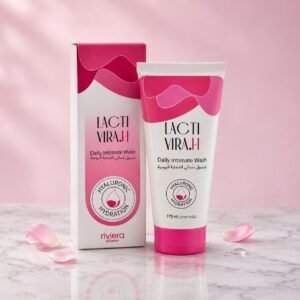
Riviera's feminine care range includes a soap-free intimate wash for the external area and products intended for specific uses as directed on their labels. Each product page lists the ingredients and directions. Explore LACTI VIRA.H Intimate Wash or read Find care by concern: Intimate hygiene.
Riviera Pharma
How Riviera can help
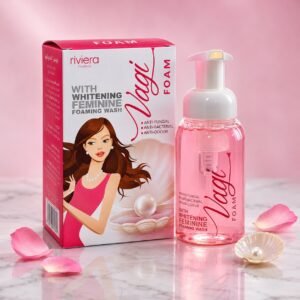
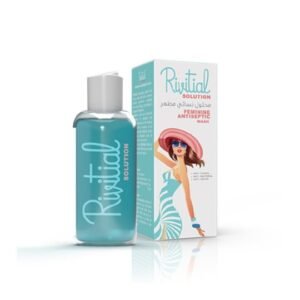
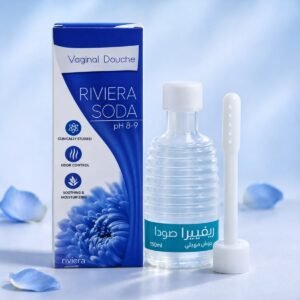
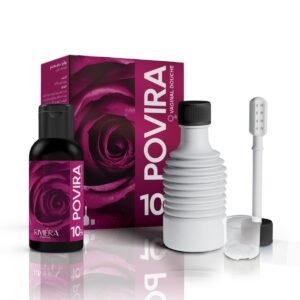
LACTI VIRA.H is a soap-free daily wash with lactic acid, hyaluronic acid, jojoba oil and shea butter that helps keep the external area fresh and comfortable, from the first period on. VAGI Foam is a daily antiseptic foam with hexamidine, tea tree oil, chamomile and vitamin C that helps against germs, fungi and odour, with whitening care. RIVITIAL Foam is a registered antiseptic foam with hexamidine, chlorhexidine and chlorocresol, ready-diluted and gentle, for times of higher need such as the period, after childbirth and before or after intercourse; it is not for everyday use. RIVITIAL Solution carries the same three antiseptics (hexamidine, chlorhexidine and chlorocresol) as a solution; use it as its leaflet and your doctor or pharmacist advise. LACTI VIRA.H, VAGI Foam and RIVITIAL Foam are for external use only, never inside the vagina. RIVIERA Soda (sodium bicarbonate) and VAGI-SEPT (boric acid 3%) are medicated vaginal douches for short courses on a doctor's advice during yeast infections, never for routine hygiene. POVIRA Douche, with povidone-iodine 10%, is diluted fresh for each use and helps against bacteria, fungi and viruses as a 6-day course on the doctor's advice, for example after a gynaecological procedure. For intimacy, Silq is a flavoured, fragrance-free lubricant with lactic acid that helps support the natural balance of the intimate area while easing dryness.



Meet the ingredients
ProfessionalA scientific summary for pharmacists and physicians; references are published and verified on PubMed.
References
- 1Lin YP, Chen WC, Cheng CM, Shen CJ. Vaginal pH value for clinical diagnosis and treatment of common vaginitis. Diagnostics (Basel). 2021;11(11):1996.
- 2Chen Y, Bruning E, Rubino J, Eder SE. Role of female intimate hygiene in vulvovaginal health: global hygiene practices and product usage. Womens Health (Lond). 2017;13(3):58–67.
- 3Office on Women's Health, U.S. Department of Health and Human Services. Douching (fact sheet). womenshealth.gov.
- 4Martino JL, Vermund SH. Vaginal douching: evidence for risks or benefits to women's health. Epidemiol Rev. 2002;24(2):109–124.
Found it useful? Share it with someone who cares
Reviewed by: Riviera Pharma Scientific Affairs Team. General information, not medical advice. This article does not replace a consultation with a doctor, gynaecologist or pharmacist.