Oral health4 min read · 9 references
Healthy gums: what plaque, bleeding and gingivitis are telling you
Bleeding gums are common, but they are not something to ignore. Learn how plaque leads to gingivitis, how to reverse it early, and where a mouthwash fits in.
Did you know?
Plaque is a sticky film of bacteria that forms on teeth every day and irritates the gums if it is not removed.
Gingivitis, the early stage of gum disease, is reversible with good daily cleaning.
Bleeding when brushing is usually a sign of inflammation, not a reason to brush less.
Chlorhexidine mouthwash is meant for short-term use as advised, and can cause temporary staining and taste changes.
Plaque: the film you can't see
Run your tongue over your teeth a few hours after brushing and you may feel a soft, slightly fuzzy layer. That is plaque, a sticky film of bacteria that builds up on teeth every single day. It is completely normal, but if it is not cleaned away, it starts to irritate the gums along the edge of the teeth.
Left for longer, plaque can harden into tartar, a rough deposit that a toothbrush cannot remove and that gives even more bacteria somewhere to hold on.
Gingivitis and gum disease: what is the difference?
When plaque irritates the gums, they become inflamed. This early stage is called gingivitis. The gums may look red or puffy and often bleed when you brush or floss. The encouraging part is that gingivitis is reversible: with good daily cleaning, gums usually settle down and become healthy again.
If gingivitis is ignored for a long time in people who are susceptible, the inflammation can spread deeper and damage the tissues and bone that hold the teeth in place. This is called periodontitis. It is a long-term condition that needs care from a dentist, and it can eventually lead to loose teeth. Looking after your gums early is the best way to prevent it.
Signs to look out for
- Gums that bleed when you brush, floss or eat something hard
- Red, swollen or tender gums
- Bad breath or a bad taste that keeps coming back
- Gums that seem to be pulling away from the teeth
- Teeth that feel loose or a bite that feels different
Myths worth dropping
MythBleeding gums are normal, so I should leave them alone.
FactBleeding is usually a sign of inflammation caused by plaque. Gentle, thorough cleaning along the gumline is what helps, not avoiding the area.
MythIf my gums bleed, I should brush less.
FactBrushing less lets more plaque build up. Use a soft brush, clean gently but carefully, and the bleeding usually improves as the gums heal.
MythA medicated mouthwash can replace brushing.
FactA mouthwash cannot remove plaque on its own. It can support your routine, but brushing and cleaning between the teeth do the main work.
Everyday habits for healthy gums
- Brush twice a day with a fluoride toothpaste, angling the bristles towards the gumline.
- Clean between your teeth every day with floss or interdental brushes; this is where gum problems often start.
- Choose a soft or medium brush and replace it every three months, or sooner if the bristles splay.
- If you smoke, stopping is one of the best things you can do for your gums.
- Keep regular dental check-ups and professional cleaning to remove tartar.
- If your dentist or pharmacist recommends a mouthwash, use it as an extra step after brushing, and follow the advice on how long to use it.
When to see a dentist
See your dentist if your gums bleed regularly for more than a week or two, if they are swollen or painful, if you notice receding gums, loose teeth or pus, or if bad breath does not go away. People with diabetes, pregnant women and smokers should be especially attentive, as their gums can be more vulnerable. Early care is simpler, and healthy gums are well worth protecting.
Riviera Pharma
How Riviera can help
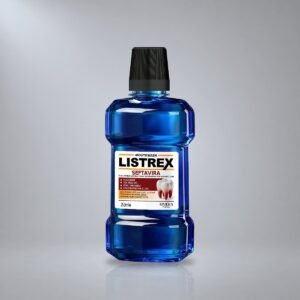
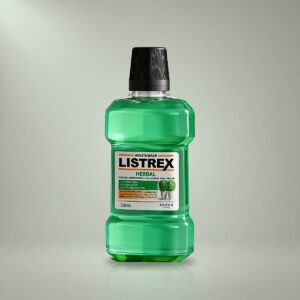
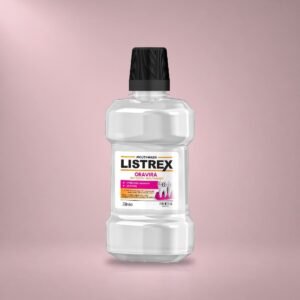
Brushing and cleaning between the teeth remain the foundation of gum care, and a mouthwash can help as an extra step. LISTREX Septavira contains chlorhexidine with menthol and helps reduce plaque bacteria when used for a short period, as advised by your dentist or pharmacist; like other chlorhexidine mouthwashes, it may cause temporary tooth staining or a change in taste. For everyday use, LISTREX Herbal has a sugar-free base with xylitol and sorbitol and a herbal character, and Listrex Oravira contains hydrogen peroxide, an oxygenating ingredient, together with xylitol, sorbitol and menthol, helping to keep the mouth fresh as part of a full routine. None of these replaces brushing, flossing or a visit to the dentist when gums keep bleeding. Ask your pharmacist which mouthwash suits you and for how long to use it. For a painful tooth or sore gums, LISTREX Lido is a dental spray with lidocaine hydrochloride and clove oil that numbs the spot very fast for a short time; it adds local relief alongside your painkiller and does not replace it or a visit to the dentist.

Meet the ingredients
ProfessionalA scientific summary for pharmacists and physicians; references are published and verified on PubMed.
Definition and classification
Dental plaque-induced gingivitis is a site-specific inflammatory condition initiated by biofilm accumulation, confined to the gingiva and reversible once the biofilm is disrupted. Under the 2017 World Workshop classification, a gingivitis case on an intact periodontium is defined by bleeding on probing at 10% or more of sites, without attachment or radiographic bone loss; it is localised when 10–30% of sites bleed and generalised when more than 30% bleed (Trombelli 2018). Periodontitis, by contrast, involves irreversible loss of clinical attachment and alveolar bone. Gingivitis is regarded as a necessary precursor of periodontitis, which makes its control the cornerstone of primary prevention (Chapple 2015).
Epidemiology
Gingivitis is highly prevalent across all age groups. Severe periodontitis was estimated to have a global age-standardised prevalence of about 11% and to rank as the sixth most prevalent condition worldwide, with prevalence rising steeply in early adulthood (Kassebaum 2014).
Pathophysiology
Undisturbed supragingival plaque matures within days from a Gram-positive, largely facultative community to one richer in Gram-negative anaerobes. Bacterial products trigger a host inflammatory response with vasodilatation, increased vascular permeability, crevicular fluid flow and leukocyte infiltration, seen clinically as erythema, oedema and bleeding. In susceptible hosts, dysbiosis and a dysregulated immune-inflammatory response drive progression to periodontitis. Modifying factors include smoking, poorly controlled diabetes, pregnancy and other hormonal changes, plaque-retentive restorations, mouth breathing and certain drugs causing gingival enlargement (Trombelli 2018).
Assessment and differential diagnosis
Record bleeding on probing, plaque scores, probing depths and attachment levels, with radiographs where attachment loss is suspected (Trombelli 2018). Differentiate plaque-induced gingivitis from non-plaque-induced gingival lesions (viral, fungal, traumatic, allergic, desquamative mucocutaneous disease), drug-influenced enlargement, and gingival bleeding due to haematological disorders or anticoagulant therapy. Spontaneous bleeding, petechiae, ulceration, rapid enlargement or systemic symptoms warrant prompt referral.
Management and evidence for mouthrinses
Mechanical plaque removal by the patient, reinforced by professional instruction and debridement, is the primary intervention; chemical agents are adjuncts and do not replace it (Chapple 2015). Six-month home-use trials show that several chemical formulations provide clinically meaningful additional reductions in plaque and gingivitis, with considerable heterogeneity between products (Serrano 2015).
- Chlorhexidine: the reference anti-plaque agent. As an adjunct for 4–6 weeks it produced a large reduction in plaque (SMD 1.45) and a modest reduction in gingivitis (0.21 on the 0–3 Gingival Index), both on high-certainty evidence (James 2017). Its side-effect profile favours short-term, targeted use, for example during acute gingival flare-ups, after periodontal surgery or when brushing is temporarily impaired.
- Essential oils: in trials of four weeks or more, a standardised formulation gave plaque reduction at least comparable to chlorhexidine with no significant difference for gingival inflammation, making it a reasonable option for longer-term use (Van Leeuwen 2011).
- Cetylpyridinium chloride (CPC): adds a small but significant benefit to toothbrushing for plaque and gingival inflammation (Haps 2008).
- Hydrogen peroxide: an oxygenating agent; it did not consistently prevent plaque as short-term monotherapy, though long-term adjunctive use appeared to reduce gingival redness (Hossainian 2011). A later review reported anti-inflammatory and antibacterial effects versus placebo but weaker plaque effects than chlorhexidine, with poorly comparable studies (Muniz 2020).
- Zinc salts: mainly used for malodour and anti-calculus effects, usually in combination formulations; evidence as a stand-alone anti-gingivitis agent is limited.
Menthol contributes flavour and a cooling sensation; xylitol and sorbitol are non-cariogenic sweeteners rather than anti-plaque actives.
Safety and counselling points
Chlorhexidine causes extrinsic brown staining of teeth, tongue and restorations, which increases with duration of use; taste disturbance, burning and mucosal soreness or desquamation are also reported (James 2017). Advise patients to leave about 30 minutes between toothpaste and chlorhexidine rinsing, because anionic surfactants such as sodium lauryl sulphate can reduce its activity, and to limit tea, coffee and red wine during use. Stains can usually be removed by professional cleaning. Rare but serious hypersensitivity, including anaphylaxis, has been reported; discontinue at the first sign of allergy. Hydrogen peroxide rinses should be used as labelled and not swallowed. Gingival bleeding persisting despite good hygiene, or any sign of attachment loss, requires dental assessment.
References
- 1James P, Worthington HV, Parnell C, Harding M, Lamont T, Cheung A, Whelton H, Riley P. Chlorhexidine mouthrinse as an adjunctive treatment for gingival health. Cochrane Database Syst Rev. 2017;3(3):CD008676. PMID 28362061 DOI
- 2Serrano J, Escribano M, Roldán S, Martín C, Herrera D. Efficacy of adjunctive anti-plaque chemical agents in managing gingivitis: a systematic review and meta-analysis. J Clin Periodontol. 2015;42 Suppl 16:S106-38. PMID 25495592 DOI
- 3Van Leeuwen MP, Slot DE, Van der Weijden GA. Essential oils compared to chlorhexidine with respect to plaque and parameters of gingival inflammation: a systematic review. J Periodontol. 2011;82(2):174-94. PMID 21043801 DOI
- 4Haps S, Slot DE, Berchier CE, Van der Weijden GA. The effect of cetylpyridinium chloride-containing mouth rinses as adjuncts to toothbrushing on plaque and parameters of gingival inflammation: a systematic review. Int J Dent Hyg. 2008;6(4):290-303. PMID 19138180 DOI
- 5Hossainian N, Slot DE, Afennich F, Van der Weijden GA. The effects of hydrogen peroxide mouthwashes on the prevention of plaque and gingival inflammation: a systematic review. Int J Dent Hyg. 2011;9(3):171-81. PMID 21356027 DOI
- 6Muniz FWMG, Cavagni J, Langa GPJ, Stewart B, Malheiros Z, Rösing CK. A systematic review of the effect of oral rinsing with H2O2 on clinical and microbiological parameters related to plaque, gingivitis, and microbes. Int J Dent. 2020;2020:8841722. PMID 33178277 DOI
- 7Chapple IL, Van der Weijden F, Doerfer C, Herrera D, Shapira L, Polak D, et al. Primary prevention of periodontitis: managing gingivitis. J Clin Periodontol. 2015;42 Suppl 16:S71-6. PMID 25639826 DOI
- 8Trombelli L, Farina R, Silva CO, Tatakis DN. Plaque-induced gingivitis: case definition and diagnostic considerations. J Clin Periodontol. 2018;45 Suppl 20:S44-S67. PMID 29926492 DOI
- 9Kassebaum NJ, Bernabé E, Dahiya M, Bhandari B, Murray CJ, Marcenes W. Global burden of severe periodontitis in 1990-2010: a systematic review and meta-regression. J Dent Res. 2014;93(11):1045-53. PMID 25261053 DOI
Found it useful? Share it with someone who cares
This article is general information and is not a substitute for advice from a doctor, dentist or pharmacist.