Infection control6 min read · 3 references
From chair to autoclave: the order of instrument reprocessing
Cleaning comes before everything else, and heat sterilization stays the standard for instruments that tolerate it. A step-by-step look at the sterilization cycle.
Every instrument that touches a patient must be safe for the next one. How far it is processed depends on what it touches.
Three risk levels
- Critical instruments penetrate soft tissue or bone, such as surgical instruments and scalers. They must be sterilized, preferably by heat.
- Semicritical instruments touch mucous membranes, such as mirrors and impression trays. They are heat-sterilized; if an item cannot tolerate heat, high-level disinfection is the minimum.
- Noncritical items touch only intact skin. They need cleaning and low- or intermediate-level disinfection.
The cycle, step by step
1. Safe transport from the treatment room in a closed container.
2. Cleaning: by hand, in an ultrasonic bath or in a washer-disinfector. Enzymatic detergents help break down blood and organic residues. Wear heavy-duty gloves.
3. Rinsing and drying.
4. Inspection: look for remaining soil and damage. An instrument that is not clean cannot be sterilized reliably.
5. Packaging in sterilization pouches or wraps.
6. Sterilization in a validated autoclave, with routine monitoring.
7. Storage in a clean, dry place until use.
Why cleaning comes first
Residual blood and tissue protect microorganisms from the sterilant and can bind to the instrument surface. Cleaning removes most of the microbial load and makes every later step work.
Where chemical disinfection fits
High-level chemical disinfection is used for heat-sensitive semicritical items such as some endoscopes. It is not a replacement for heat sterilization when an instrument can be autoclaved. Items are cleaned before immersion and rinsed thoroughly afterwards.
Where Riviera products fit
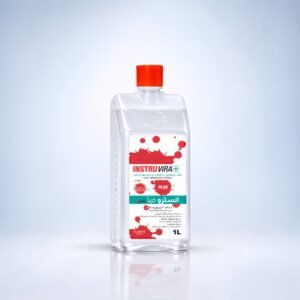
INSTRUVIRA PLUS and INSTRUVIRA are enzymatic cleaners for manual and ultrasonic cleaning. FAST CLEAN is used for chemical disinfection of instruments and endoscopes. Follow each label for dilution and immersion time, then complete the cycle to the autoclave.
Riviera Pharma
How Riviera can help


Meet the ingredients
ProfessionalA scientific summary for pharmacists and physicians; references are published and verified on PubMed.
The Spaulding classification (critical, semicritical, noncritical) underlies CDC guidance (Rutala 2008; Kohn 2003): critical and heat-tolerant semicritical dental instruments are heat-sterilized after cleaning; high-level disinfection is reserved for heat-sensitive semicritical devices. Cleaning precedes any disinfection or sterilization step.
References
- 1Kohn WG, Collins AS, Cleveland JL, et al. Guidelines for infection control in dental health-care settings - 2003. MMWR Recomm Rep. 2003;52(RR-17):1-61. PMID 14685139
- 2Rutala WA, Weber DJ; HICPAC. Guideline for Disinfection and Sterilization in Healthcare Facilities, 2008 (update 2019). Atlanta: CDC.
- 3McDonnell G, Russell AD. Antiseptics and disinfectants: activity, action, and resistance. Clin Microbiol Rev. 1999;12(1):147-179. PMID 9880479
Found it useful? Share it with someone who cares
Reviewed by: Riviera Pharma Scientific Affairs Team. General professional information; it does not replace national infection-control rules, the product label or the safety data sheet.